
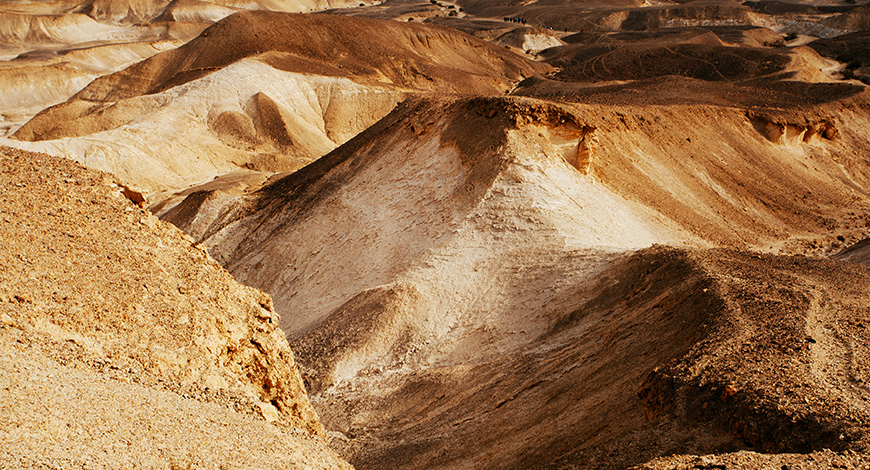
Geography often shapes religious memory because land determines movement, settlement, conflict, and identity. The Negev Desert in the Bible is more than a southern landscape, as it appears in traditions connected with Abraham, Beersheba, Kadesh Barnea, Judah, Simeon, Edom, and the boundaries of ancient Israel.
The Negev Desert occupies the southern part of present-day Israel and extends across a region that includes semi-arid valleys, highlands, dry riverbeds, and desert routes. Although much of the area is described as desert or semi-desert, its ancient history includes farmland, pastureland, trade movement, local kingdoms, and later agricultural development under Nabataean, Byzantine, and early Islamic influence.
The Negev Desert and Its Historical Regions
The history of the Negev Desert is easier to understand when the region is divided into several historical zones. This distinction is important because the Negev Desert in the Bible does not always refer to the same territory that modern geography identifies as the Negev.
The main historical regions can be understood as follows:
- The biblical Negev refers mainly to the northeastern Arad-Beersheba Valley, where biblical traditions most clearly connect the region with Israelite and Judean settlement.
- The northern Negev was a semi-desert area that supported agriculture, settlement, and later development as one of the important agricultural zones of the wider region.
- The central Negev was drier and included the Negev Highlands, as well as the area known in the Bible as the Desert of Zin.
- The southern Negev was the driest part of the region and later became important for mineral resources, desert routes, and agricultural development under later powers.
This regional division shows why the Negev Desert in the Bible should be read carefully. Some biblical references may describe the Arad-Beersheba Valley, while later historical and modern discussions often use the name Negev for a much larger southern landscape.
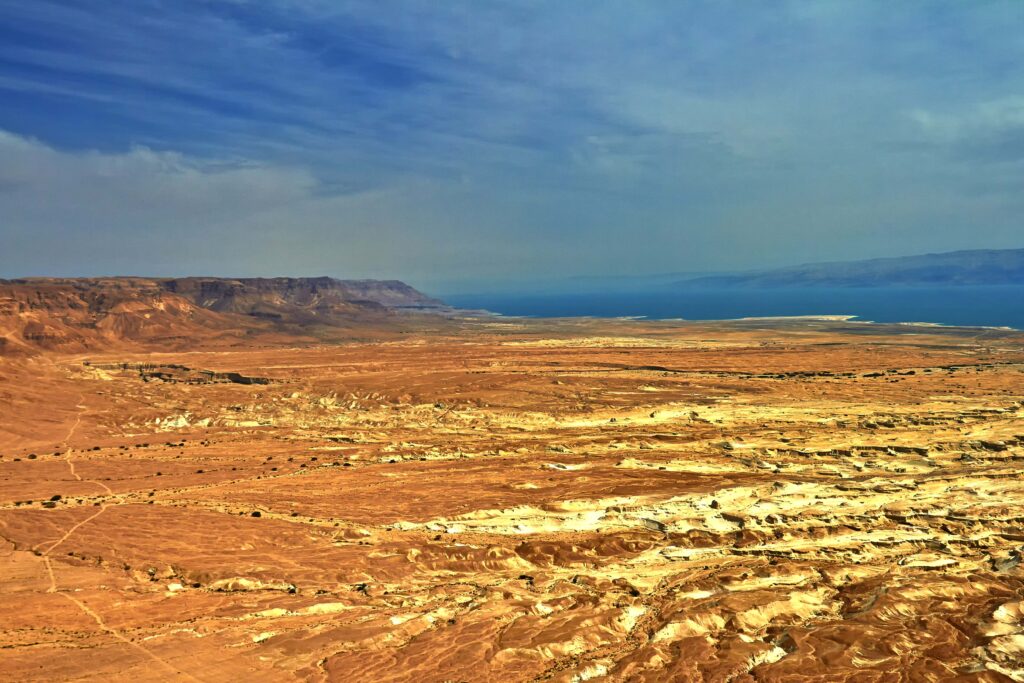
The Negev Desert in the Bible
The Negev Desert in the Bible carries significance because it connects geography with covenant, migration, tribal inheritance, boundary formation, and conflict between neighboring peoples. It appears not only as a desert region but as a southern borderland where identity, settlement, and divine promise are repeatedly defined.
The first major biblical association with the Negev Desert comes through Abraham. In Genesis, Abraham is described as spending time in the Negev after leaving Egypt, and Beersheba later becomes one of the most important locations connected with his life. Beersheba served as a place of residence, agreement, and boundary memory, thereby giving the southern landscape a lasting role in biblical tradition.
The Negev Desert in the Bible is also connected with Kadesh Barnea and the Desert of Zin. These places appear in traditions about the wilderness generation, the approach to the promised land, and the southern boundaries described in Numbers and Joshua. This makes the region a place of movement and expectation, but also a place where entry, obedience, and belonging are tested.
Several biblical themes are especially important for understanding the Negev Desert in the Bible:
- Abraham and Beersheba connect the region with patriarchal memory, covenant traditions, and early settlement narratives.
- Kadesh Barnea and the Desert of Zin connect the region with wilderness movement, southern boundary traditions, and the approach to the promised land.
- Judah and Simeon connect the region with tribal inheritance because parts of the southern territory are described as belonging to Judah and, within Judah, to Simeon.
- The phrase “from Dan to Beersheba” gives Beersheba symbolic importance as the southern limit of Israel in several biblical contexts.
- Edom complicates the picture because some traditions associate parts of the central and southern Negev with the descendants of Esau rather than with Israel.
- The Books of Kings present the region as a place of political pressure, where Edomites sometimes came under Israelite or Judean rule and later regained independence.
This tension makes the Negev Desert in the Bible more complex than a simple southern extension of Israelite territory. In some passages, the Negev appears inside the world of Judah, Simeon, and Israelite memory. In others, it is closely connected with Edom, the descendants of Esau, and a different territorial tradition.
The Negev Desert in the Bible, therefore, functions as a border region in both geographical and theological terms. It marks the edge of settlement, the direction of wilderness movement, the southern point of national memory, and the contested space between Israel, Judah, and Edom. Its biblical importance stems from this layered identity, in which land, ancestry, promise, and conflict remain interconnected across multiple traditions.
Why the Negev Desert Matters in Biblical History
The Negev Desert in the Bible matters because it brings together settlement, promise, movement, and limitation within one southern landscape. It is connected with Abraham and Beersheba, the wilderness generation and Kadesh Barnea, tribal inheritance and Judah, and the difficult relationship between Israel and Edom.
The biblical Negev is not only a desert background for events. It is a geographical argument about where identity begins, where land ends, and how different peoples understood their place in the same border region. Its significance remains rooted in continuity, movement, conflict, and the long memory of the southern land.
Comments are closed